How Virtual Reality Improves Industrial Fire Response
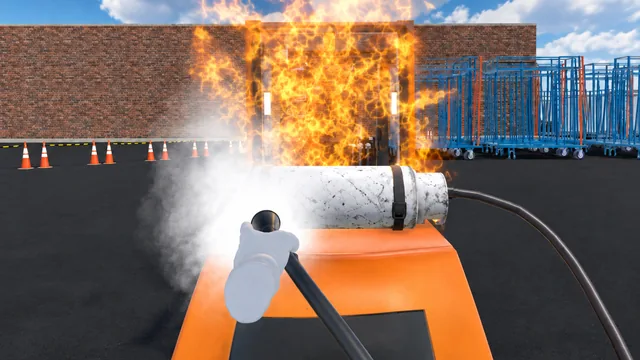
Industrial fires can develop quickly, involve complex equipment and expose personnel to extreme pressure. Traditional instruction is important, but it cannot always recreate the urgency and uncertainty of an emergency without introducing real risks. Virtual reality provides a controlled way to practice fire response, helping teams recognize hazards, follow procedures and make decisions before facing an actual incident.
Immersive simulations allow personnel to practice industrial emergency procedures in a controlled environment. This approach complements broader industrial safety training and immersive simulations.
Why fire-response training benefits from virtual reality
Fire emergencies are difficult to reproduce safely in a real workplace. A virtual reality simulation can recreate a realistic industrial setting and place personnel in a developing emergency without exposing them, equipment or facilities to an actual fire. Participants can practice identifying hazards, assessing the situation and responding according to their organization’s procedures.
This immersive approach supports active learning. Instead of only reading about emergency protocols or watching a demonstration, participants interact with a scenario and experience how their decisions affect the situation. That practice can help reinforce awareness and confidence while keeping the training environment controlled.
Practicing critical decisions under pressure
An effective fire-response exercise involves more than recognizing flames. Personnel may need to determine whether an incident can be managed, communicate with colleagues, activate an emergency response, choose a safe route and evacuate when conditions require it. VR allows these actions to be practiced repeatedly and in sequence.
Scenarios can include changing conditions, such as limited visibility, blocked access or a fire developing near industrial equipment. Repetition helps participants become more familiar with the steps they are expected to follow, while instructors and safety leaders can identify gaps in understanding. Practicing the decision to stop can also reinforce safe choices during emergencies.
Building stronger teamwork and communication
Industrial emergencies are managed by teams, not by isolated individuals. Virtual reality training can support individual exercises or group sessions in which participants coordinate roles, communicate information and practice emergency decision-making together. This helps connect personal actions with the wider response plan.
By training in a shared scenario, teams can discuss what worked, where communication slowed down and which procedures need clarification. These observations can support continuous improvement in emergency preparedness and reinforce a culture in which personnel actively participate in safety. Collaborative exercises may also help teams prepare for coordinated rapid response.
Adapting simulations to industrial operations
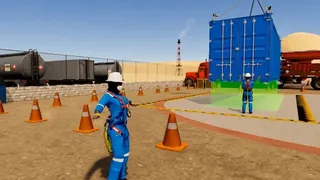
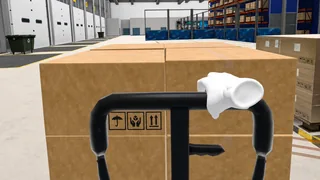
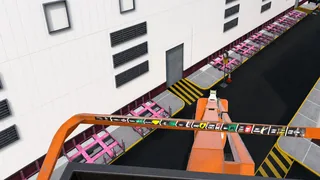
Fire-response training is most useful when it reflects the realities of the workplace. Virtual reality modules can be adapted to represent specific facilities, equipment, processes and operational risks. Organizations can also incorporate their own response procedures, evacuation routes and role responsibilities into the learning experience.
TrainBeyond develops customized virtual reality training solutions for industrial environments, including emergency scenarios involving fires, hydrogen sulfide leaks and oil spills in land-based drilling settings. This flexibility allows training teams to address the situations most relevant to their operations and update content as procedures or conditions change. Scenario design can be aligned with specific objectives through immersive training scenarios.
Making training repeatable and measurable
Because a virtual scenario can be reset and repeated, personnel can practice without the logistics, disruption or hazards associated with a live emergency exercise. Repetition gives participants opportunities to improve their response and learn from mistakes in a controlled setting.
Immersive training can also provide feedback during the learning experience. Instructors can review how participants identified the hazard, followed procedures, communicated and completed the scenario. These observations help reveal training needs and guide future sessions, although virtual reality should complement—not replace—an organization’s complete emergency plan, practical instruction and site-specific drills.
Integrating virtual reality into an industrial fire-preparedness program
A successful implementation begins with an assessment of the organization’s risks, workforce roles and existing training program. From there, safety leaders can select the scenarios that offer the greatest value, prepare personnel to use the equipment and introduce immersive training gradually where appropriate.
Organizations should provide a clear, obstacle-free training space, supervise sessions and allow regular breaks to support participant comfort. They should also evaluate the content continuously, gather feedback and update simulations when equipment, procedures or operating conditions change.
Conclusion
Virtual reality gives industrial organizations a practical way to rehearse fire response in a safe, immersive and repeatable environment. By combining realistic scenarios with feedback, teamwork and customized procedures, this training can strengthen hazard awareness and emergency preparedness.
Used as part of a broader safety program, immersive learning helps personnel connect knowledge with action before an emergency occurs. The result is a more prepared workforce and a stronger foundation for continuous improvement in industrial safety.
Frequently Asked Questions
Can virtual reality replace a complete industrial fire-safety program?
No. It should complement the organization’s emergency plan, practical instruction, equipment familiarization and site-specific drills. Virtual reality is a way to rehearse decisions and procedures in a controlled setting, not a substitute for every part of fire-preparedness training.
What can personnel practice in a fire-response scenario?
Depending on the organization’s objectives, participants can practice identifying hazards, assessing conditions, communicating with team members, activating an emergency response, selecting a safe route, following evacuation procedures and deciding when conditions require them to stop intervening and evacuate.
Can scenarios simulate changing fire conditions?
Yes. Scenarios can be designed around conditions such as limited visibility, blocked access or a fire developing near industrial equipment. These changes allow personnel to practice adapting their decisions as an incident evolves.
Can teams train together in the same scenario?
Yes. The technology can support individual exercises as well as group sessions in which participants coordinate roles, share information and practice emergency decision-making. Group debriefs can help identify communication delays and clarify responsibilities.
How can an organization measure performance during training?
Instructors can review how participants identified hazards, followed procedures, communicated, selected routes and completed the scenario. These observations can reveal knowledge gaps and help safety leaders plan future training sessions.
How often should fire-response training be repeated?
The appropriate schedule depends on the organization’s risk assessment, procedures, workforce roles and training requirements. Repeating scenarios when procedures, equipment or operating conditions change can help keep the learning experience relevant.
Contact TrainBeyond to explore customized virtual reality training simulations.
Train this in VR
Modules that rehearse what this article describes.