Benefits of Coordinating Rapid-Response Teams in One Virtual Environment
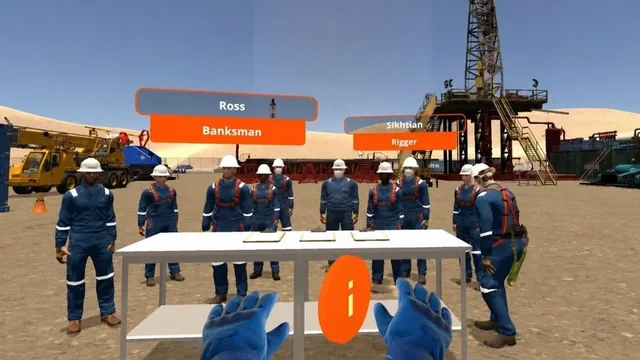
When a hazardous-material incident occurs, effective response depends on more than individual knowledge. Rapid-response teams must communicate clearly, recognize changing conditions, follow their assigned roles, and make coordinated decisions under pressure. Virtual reality provides a controlled way to rehearse these interactions before personnel face a real emergency.
A shared virtual environment can bring multiple participants into the same simulated scenario, allowing them to practice together rather than training only as individuals. Organizations can use this approach to simulate chemical-release events—including potential chlorine, ammonia, or other hazardous-reagent leaks—without exposing personnel to the real substance or interrupting live operations.
Why Team-Based Emergency Training Matters
Emergency procedures often involve several people performing different tasks at the same time. One responder may identify the hazard, another may establish an exclusion zone, while others communicate with supervisors, support evacuation, or coordinate with additional response resources. If these actions are practiced separately, the team may still struggle to work together when conditions become stressful.
Team-based virtual training creates an opportunity to rehearse communication, role clarity, and decision-making in context. Participants can learn how their actions affect the rest of the team and identify gaps in coordination before an actual incident occurs.
Advantages of Coordinating Teams in a Shared Virtual Scenario
1. Practice communication under pressure
A simulated release can require participants to exchange information, confirm instructions, report changing conditions, and escalate concerns. Practicing these conversations in a realistic setting helps teams build disciplined communication habits and reduces the risk of incomplete or misunderstood messages.
2. Strengthen role clarity and accountability
Shared scenarios make it easier to define responsibilities for incident commanders, entry teams, monitoring personnel, evacuation coordinators, and other roles established by the organization’s emergency procedures. Participants can see how each responsibility contributes to the overall response and where handoffs may fail.
3. Rehearse hazardous scenarios without real exposure
Chlorine, ammonia, and other hazardous reagents can present serious risks when released. Virtual reality allows organizations to represent the visual, operational, and decision-making elements of a release scenario without creating an actual chemical exposure. The exercise can focus on recognizing the event, following site procedures, communicating hazards, selecting appropriate protective measures, and determining when to withdraw or evacuate.
These simulations should complement—not replace—the organization’s written emergency action plans, regulatory requirements, qualified instruction, personal protective equipment training, and any hands-on practice required for specific roles.
4. Repeat critical decisions safely
Virtual scenarios can be repeated so that teams can practice the same response, review what happened, and try again. Instructors can introduce variations such as a changing release location, blocked access, a delayed communication, or a new evacuation constraint. Repetition helps participants improve their responses without the cost, disruption, or danger of recreating a live chemical incident.
5. Improve collaboration across locations
TrainBeyond’s virtual reality training can support individual, on-demand experiences as well as instructor-led group sessions. This flexibility can help organizations coordinate personnel who work in different facilities, shifts, or geographic regions. A shared scenario gives distributed teams a common exercise and a consistent basis for discussion.
6. Receive feedback that supports continuous improvement
Immersive training can provide immediate feedback about participant actions and performance. After a team exercise, instructors and safety leaders can review communication, procedural decisions, response timing, and areas requiring additional practice. These observations can inform updates to training content and reinforce a proactive safety culture.
How to Design an Effective Chemical-Release Exercise
A useful virtual exercise begins with the organization’s actual risks and procedures. Before developing a scenario, identify the substances, work areas, response roles, alarm and communication methods, evacuation routes, and decision points that are relevant to the site. The scenario should reflect the organization’s approved procedures rather than encourage participants to improvise technical controls.
For a chlorine or ammonia release simulation, the exercise might begin with an abnormal reading or reported odor and then require the team to recognize the potential hazard, communicate the alert, control access, account for personnel, and coordinate the next step according to site procedures. The objective is not to recreate a release physically; it is to strengthen coordinated decision-making and response readiness.
Best Practices for Implementation
- Train by role: Give each participant responsibilities that match their actual position and level of authority.
- Start with clear objectives: Define whether the session focuses on communication, evacuation, command structure, hazard recognition, or another measurable outcome.
- Use realistic but controlled variations: Add complexity gradually so the team can learn from each exercise.
- Include a structured debrief: Discuss what went well, where communication broke down, and which procedures need reinforcement.
- Update the scenario: Revise the exercise when equipment, processes, personnel, facilities, or emergency procedures change.
Build More Prepared Response Teams
Coordinating rapid-response teams in one virtual environment helps organizations turn emergency procedures into shared practice. By bringing multiple participants into realistic, repeatable simulations, teams can strengthen communication, clarify responsibilities, and prepare for hazardous-release scenarios without the risks of a live chemical event.
TrainBeyond develops customizable virtual reality training experiences that can be aligned with an organization’s operational and safety objectives. Contact TrainBeyond to discuss a customized response-training simulation.
Train this in VR
Modules that rehearse what this article describes.