How Virtual Reality Turns Fire Extinguisher Protocols into Muscle Memory for Workers
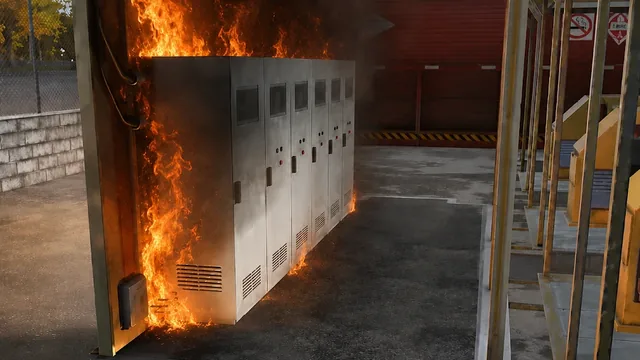
Knowing what to do during a fire is different from being ready to act under pressure. Workers may understand extinguisher procedures in a classroom and still hesitate when faced with smoke, flames, alarms, and limited time to make a decision. Virtual reality (VR) helps close that gap by turning safety instruction into repeated, practical experience.
With immersive simulations, workers can practice recognizing hazards, selecting an appropriate response, handling an extinguisher, and knowing when to stop and evacuate—all in a controlled environment. Repetition, immediate feedback, and realistic scenarios help transform a written protocol into a response that feels more automatic when it matters most.
Why Fire Extinguisher Training Requires More Than Information
Fire extinguisher training is not only about memorizing instructions. It also involves situational awareness, judgment, coordination, and the ability to follow a sequence of actions while under stress. A worker must understand the conditions of the incident, identify whether the situation can be addressed safely, use the correct equipment according to the organization’s procedures, and communicate or evacuate when the risk becomes too great.
Traditional instruction can explain these steps, but explanation alone does not create reliable performance. Workers need opportunities to practice. VR provides a safe way to repeat critical decisions and actions without exposing people, facilities, or equipment to a live fire.
How VR Builds Muscle Memory
Practice in a Realistic Environment
VR places workers inside a three-dimensional simulation that can reproduce the visual and operational conditions of a workplace. Instead of simply watching a demonstration, participants interact with the scenario and respond to changing conditions. A fire can appear in a work area, near equipment, or in another location relevant to the organization’s operations.
This context helps connect the protocol to the environment where it may be used. Workers practice looking for hazards, orienting themselves, and responding to the situation rather than recalling isolated information from a manual.
Repeat the Same Procedure Until It Becomes Familiar
Immersive training makes repetition practical. A participant can complete a scenario, review the result, and repeat it until the sequence becomes familiar. Repeated practice strengthens recall and helps reduce hesitation when workers need to act quickly.
Training teams can also vary the conditions. Workers may encounter different locations, levels of visibility, equipment arrangements, or stages of an incident. This prevents memorization of one fixed sequence and encourages participants to apply the underlying safety procedure to changing circumstances.
Learn from Mistakes Without Real-World Consequences
In a virtual scenario, a participant can make an incorrect decision and see how the situation develops without creating an actual emergency. This creates a safe learning environment where workers can identify gaps, correct their approach, and try again.
For fire response, this is especially valuable. The simulation can show when a situation is no longer appropriate for extinguisher use and when evacuation or escalation is the safer action. Practicing that judgment helps workers understand that using an extinguisher is not always the correct response.
Receive Immediate Feedback
VR training can provide immediate feedback on the participant’s actions and performance. Depending on the scenario, the system may indicate whether the worker followed the required sequence, interacted with the equipment correctly, or made an appropriate decision as conditions changed.
This feedback gives instructors and learners a clearer basis for improvement. Instead of waiting until the end of a course or relying only on a written test, the participant can correct errors while the experience is still fresh.
What a VR Extinguisher Scenario Can Include
A customized simulation can be designed around the procedures, equipment, and hazards relevant to a specific organization. A scenario may include:
- Recognizing a developing fire and identifying surrounding hazards.
- Assessing whether the situation remains suitable for an initial response.
- Choosing the appropriate extinguisher or following the organization’s equipment-selection procedure.
- Practicing the required handling and discharge sequence.
- Maintaining awareness of exits, escape routes, and changing conditions.
- Communicating with coworkers or initiating the organization’s emergency response process.
- Recognizing when to stop, move away, and evacuate.
These elements can be adapted to different facilities, work areas, job roles, and operating procedures. The goal is not to replace an organization’s written emergency plan, but to help workers practice applying it.
From Individual Practice to Team Readiness
Fire emergencies require more than individual performance. Workers must also coordinate, communicate, and understand their responsibilities. VR can support individual exercises as well as instructor-led or group-based experiences, helping teams practice decisions in a shared scenario.
Team simulations may focus on communication, role clarity, escalation, evacuation, and coordination with supervisors or emergency personnel. Practicing these interactions helps reinforce a culture in which workers respond according to a common procedure instead of improvising under pressure.
Making VR Training Relevant to Your Workplace
The effectiveness of a simulation depends on how closely it reflects the organization’s actual needs. Before developing or deploying a module, training leaders should identify the locations, hazards, equipment, roles, and procedures that matter most. Content can then be adapted to reflect the work environment and the experience level of the participants.
TrainBeyond develops customizable VR training experiences for workplace safety. Its immersive solutions can simulate emergency scenarios, including fire-related events, and can be updated as procedures, operations, or training priorities change. This flexibility helps organizations provide relevant practice for different teams and locations.
Implementation should also include appropriate orientation to the VR equipment, supervised sessions, breaks, and instructor guidance. VR works best as part of a broader safety program that may include written procedures, discussion, evaluation, and practical activities where required by the organization’s risk controls or training plan.
How to Measure Progress
Completion alone does not show whether a worker can apply a protocol. A stronger evaluation considers how the participant performed throughout the scenario. Useful observations may include:
- Whether the worker identified the hazard and assessed the situation.
- Whether the correct procedure was followed in the required order.
- Whether the worker maintained awareness of escape options.
- Whether the worker communicated appropriately.
- Whether the worker recognized when to stop and evacuate.
- Whether performance improved after feedback and repetition.
These observations can help training teams identify common errors, provide targeted coaching, and update scenarios when workplace conditions change. Over time, the objective is to move from knowing the procedure to applying it confidently and consistently.
Conclusion: Practice Creates Preparedness
Fire extinguisher protocols become more useful when workers have practiced applying them in realistic conditions. VR transforms passive instruction into an active learning experience where participants can repeat procedures, make mistakes safely, receive feedback, and improve their decisions.
By connecting written protocols with immersive practice, organizations can help workers develop stronger situational awareness and more reliable responses. VR is not a substitute for every element of a complete fire safety program, but it is a powerful way to reinforce knowledge and build the confidence that comes from practice.
Frequently Asked Questions
Can VR teach workers how to respond to a fire?
VR can help workers practice fire-response procedures, hazard recognition, equipment interaction, communication, and evacuation decisions in a controlled simulation. The experience should be aligned with the organization’s approved procedures and integrated into its broader safety program.
How does VR help create muscle memory?
VR supports repeated, scenario-based practice. By performing the same essential actions multiple times and receiving immediate feedback, workers can strengthen recall and reduce hesitation when responding to a stressful situation.
Can VR simulate situations that are too dangerous to recreate in real life?
Yes. Immersive simulations can reproduce emergency conditions without exposing workers or physical assets to the risks of a live incident. This allows participants to practice rare or high-risk scenarios in a controlled environment.
Can VR training be customized?
Yes. VR modules can be adapted to reflect an organization’s facilities, hazards, procedures, roles, and training objectives. TrainBeyond provides customizable immersive training experiences designed around specific workplace needs.
What should organizations consider when implementing VR training?
Organizations should define their training objectives, select relevant scenarios, prepare workers to use the equipment, provide supervision and breaks, and connect the simulation to existing safety procedures and evaluation methods.
Build More Confident Emergency Responses
Give your workforce a safer way to practice critical decisions before an emergency occurs. Contact TrainBeyond to explore customized VR safety training.
Train this in VR
Modules that rehearse what this article describes.