Emergency Readiness Improves When Teams Practice the Decision to Stop
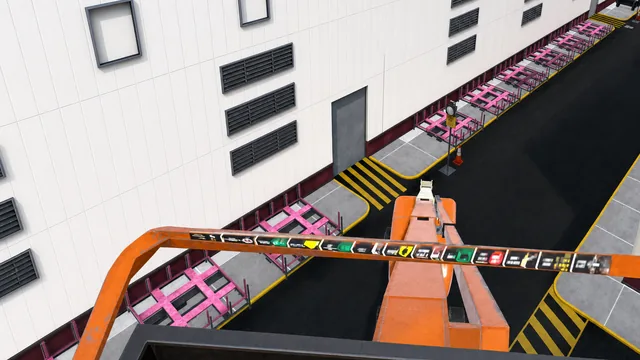
Emergency readiness is not demonstrated by completing a presentation or remembering a checklist. It is demonstrated when employees can recognize a changing hazard, choose an authorized response, communicate what they know, and stop when conditions exceed the limits of the procedure. That is where vr training and broader immersive training can add practical value to an industrial safety program: they create a controlled setting in which people can rehearse judgment before a real incident makes mistakes dangerous.
The strongest program is not the one with the most dramatic visuals. It is the one that makes critical decisions observable, repeatable, and relevant to the work performed at a specific site.
Start with the decisions your emergency plan requires
A useful scenario begins with an operational question, not with a headset or software feature. What should the employee notice first? Which signals indicate that conditions are deteriorating? What action is permitted, and what action is outside the employee’s authority? Who must be notified? At what point should the person evacuate rather than attempt intervention?
These questions turn a broad topic such as fire response, gas release, equipment failure, or evacuation into a measurable learning objective. A design brief can identify the hazard, the available information, the expected sequence, the communication responsibilities, and the conditions that require escalation. It can also define the behaviors an instructor should observe after the exercise.
- Recognizing the relevant visual, audible, or procedural cues
- Selecting the correct immediate response
- Following the site’s approved sequence of actions
- Communicating clearly with the appropriate role
- Stopping work, escalating, or evacuating when required
This structure keeps an immersive module from becoming a passive virtual tour. It gives safety leaders a consistent basis for reviewing performance across employees, shifts, and locations.
Use a vr simulation where live practice has real limits
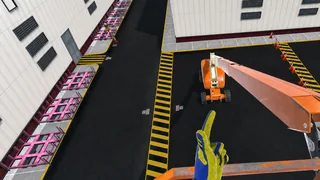
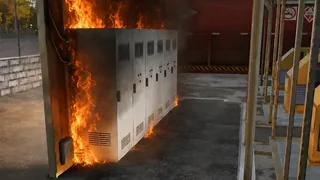
A vr simulation is most useful when a scenario would be hazardous, disruptive, costly, or difficult to stage repeatedly. TrainBeyond develops immersive experiences for industrial environments that may include fires, oil spills, H2S leaks, equipment failures, and evacuations. A controlled virtual scenario lets personnel inspect conditions, make decisions, and experience consequences without exposing an operating facility, physical equipment, or coworkers to the consequences of a training mistake.
Simulation is not a universal replacement for classroom instruction, drills, equipment familiarization, or hands-on evaluation. Its role is to add a practice layer between knowing a rule and applying it under pressure. Learners can encounter a developing event, identify the signals that matter, select a response, and review the outcome before they face a comparable situation in the field.
Realism should support the decision objective. Include equipment locations, alarms, restricted areas, blocked routes, reduced visibility, communication demands, and other details that change the response. Avoid visual complexity that creates spectacle without affecting what the learner must notice or do. In oil and gas vr training, this distinction is especially important because facility layouts, equipment, hazards, and response expectations can vary significantly.
Build repetition and variation into the learning cycle
One completed scenario does not establish reliable readiness. A stronger experience follows a deliberate cycle: orient the learner, introduce the situation, allow an initial response, review the result, and provide another opportunity to apply the lesson. Immersive learning makes this cycle practical because high-consequence situations can be repeated without repeatedly staging a live fire, spill, shutdown, or large evacuation.
The first attempt should reveal the learner’s natural response with limited prompting. The debrief can then examine what was noticed, what was missed, and how the decision aligned with the site procedure. A second attempt should include a meaningful variation. The hazard might appear in a different location, an exit might be unavailable, visibility might change, or coordination with another role might become essential.
Purposeful variation develops judgment instead of route memorization. It helps employees understand the response pattern while testing whether they can apply that pattern when familiar cues change. It also gives instructors better evidence about the source of a gap. A missed action may reflect individual knowledge, unclear procedures, poor role definition, or a communication problem between team members.
Assess communication, improvement, and readiness together
Industrial emergencies are rarely solved by one person acting alone. An employee may need to raise an alarm, notify a supervisor, confirm an instruction, direct coworkers, or report information that changes the team’s response. A module that records only the final choice can miss an important weakness: the right action taken too late or communicated too vaguely.
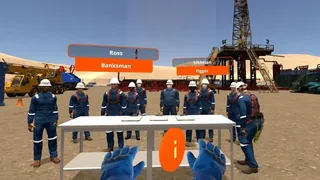
TrainBeyond’s owned materials describe immersive experiences delivered individually and through instructor-guided group sessions, including scenarios that support communication and collaboration. For a team exercise, define every participant’s role, authority, and information responsibility before the session begins. During the debrief, ask what each person observed first, which message changed the response, whether information arrived early enough, and who had authority to stop work or escalate.
Effective industrial safety training should produce evidence about performance rather than only confirming attendance. Depending on the objective, instructors may review hazard recognition, sequence accuracy, communication timing, evacuation choices, procedure selection, and improvement between attempts. TrainBeyond’s immersive programs can provide immediate feedback and track learner progress, helping instructors identify gaps and target additional coaching.
Organizations evaluating osha vr training should also define how virtual practice fits with applicable obligations, hands-on requirements, site drills, and internal qualification processes. The virtual module should strengthen the complete safety system rather than be treated automatically as a substitute for every other method. A well-designed industrial vr training program is valuable because it creates disciplined opportunities to practice decisions and learn from controlled failure.
Frequently asked questions about decision-based emergency training
What should an emergency simulation teach first?
It should teach the decisions that determine whether the situation is controlled, escalated, or evacuated. Begin with hazard recognition, available information, authorized actions, communication responsibilities, and the point at which intervention must stop.
Can immersive training replace live drills?
No single method covers every learning requirement. Immersive training can supplement classroom instruction, physical drills, equipment practice, and hands-on evaluation by allowing repeatable practice in scenarios that are dangerous or impractical to stage live.
Why include failure in a virtual scenario?
Controlled failure makes consequences visible without creating real harm. If a learner misses a warning, chooses an unsuitable response, or delays evacuation, the debrief can examine the decision and the learner can try again with a clearer understanding of the risk.
How can a team scenario evaluate communication?
Assign each participant a defined role and information responsibility, then review what was observed, reported, confirmed, and acted upon. The evaluation should consider clarity and timing, not only whether the final action was correct.
What performance evidence should instructors review?
Relevant evidence may include hazard recognition, action sequence, communication timing, procedure selection, escalation, evacuation choices, and improvement between attempts. The right measures depend on the objective established during scenario design.
How should virtual practice fit into an OSHA-related program?
Organizations should map the module to their applicable requirements and internal qualification process, then determine what classroom, hands-on, or drill-based activities remain necessary. Virtual practice should support the broader program and should not be assumed to replace every required component.
Contact TrainBeyond to discuss an immersive emergency scenario built around the decisions your team must perform reliably.
Train this in VR
Modules that rehearse what this article describes.