How to Turn Industrial VR Training Into an Operational Investment
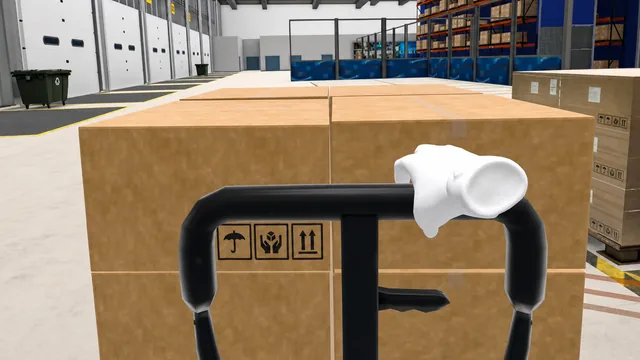
Industrial VR training is easier to evaluate when it is connected to a real operational need. The question is not whether immersive technology is impressive; it is whether it can help your organization prepare people more consistently, practice difficult decisions safely, and produce evidence that supports better training decisions. A credible business case begins with the work, the risk, and the cost of the current approach—not with a headset or a technology demonstration.
Begin with the performance gap
The strongest case for immersive training starts with a clearly defined problem. Look for tasks that are hazardous, expensive, difficult to interrupt, or rarely practiced because the real environment cannot be used repeatedly for instruction. Emergency response, hazard identification, equipment familiarization, evacuation, lockout/tagout preparation, and work around active industrial assets may all be suitable candidates.
Review internal information before choosing a scenario. Useful inputs include training hours by role and site, instructor and travel costs, production time lost during sessions, time to independent performance for new employees, recurring errors, near misses, assessment results, and differences between locations or shifts. This baseline helps leaders understand what the current method actually costs and prevents the discussion from becoming a comparison between a new technology expense and an incomplete estimate of existing training.
It also helps determine whether VR is appropriate. Classroom instruction, discussion, e-learning, supervised hands-on evaluation, and site-specific coaching remain valuable. VR is most relevant when learners need to inspect an environment, make decisions, follow a sequence, recognize changing conditions, or practice a response without exposing people or equipment to the original hazard.
Connect learning objectives to operational measures
A broad objective such as “improve safety awareness” is difficult to design and defend. A more useful objective describes observable performance: identify hazards in a defined work area, select the appropriate response, complete critical steps in the right order, or decide when a situation requires evacuation rather than intervention.
For each proposed module, document:
- The role, task, and operating context
- The hazard, error pattern, or performance gap being addressed
- The actions the learner must complete
- The evidence that indicates competent performance
- The operational measure the organization wants to influence
Measures may include assessment performance, completion patterns, repeat attempts, time to complete a procedure, correct execution of critical steps, and supervisor feedback. These indicators do not prove that training alone caused an incident reduction. They do show whether the targeted behavior can be practiced, observed, and reviewed. That distinction is important when presenting an investment to safety, operations, and finance stakeholders.
Build a complete cost baseline
Many proposals compare the price of a new VR simulation with only the registration fee for the current course. A fair comparison includes the full delivery model. Consider instructor time, employee wages during training, travel and accommodation, facility use, equipment preparation, production interruption, scheduling, administration, and the cost of repeating the same program across locations.
Separate measurable savings from potential benefits. Reduced travel, lower facility use, and fewer physical setup requirements may be directly calculated. Faster onboarding can be estimated from reliable time-to-competency records. Possible reductions in incidents, downtime, or equipment damage should be presented as scenarios or assumptions rather than guaranteed outcomes.
This approach makes the business case more credible. A finance team can challenge assumptions and still see how the model works. It is better to show a conservative estimate with clearly labeled inputs than to promise every possible benefit from industrial safety training.
Show where TrainBeyond can add practical value
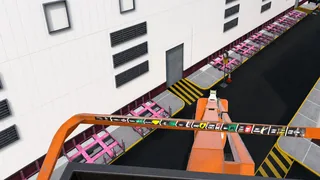
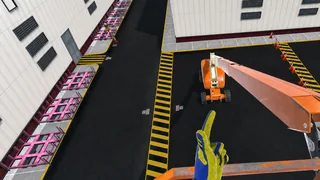
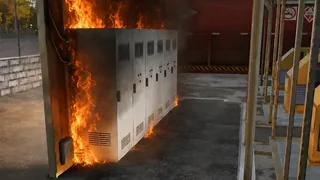
TrainBeyond develops immersive training experiences for industrial and high-risk environments. Its materials describe scenarios involving safety awareness, hazard identification, risk management, rig-site components, and emergencies such as fires, spills, blowouts, and H2S response. These applications illustrate how a VR simulation can let learners make decisions, experience consequences, receive feedback, and repeat a procedure without creating the original workplace exposure.
TrainBeyond also describes access through VR, desktop, and mobile devices, enabling organizations to select delivery formats according to the learner, location, and objective. Its industrial approach supports customized scenarios aligned with an organization’s procedures, equipment, and work environment. For oil and gas programs, TrainBeyond materials describe LMS-based assignment, automatic scoring, progress tracking, and the identification of learners who need additional practice.
These capabilities matter only when they serve a defined performance goal. A realistic digital environment is not automatically useful training. The scenario must reflect the decisions employees make on the job, and the resulting information must help instructors identify what was done correctly, where performance broke down, and what practice should happen next.
Use a focused pilot to test the investment
A pilot should be narrow enough to manage and important enough to answer a business question. Select one procedure with a visible performance gap or meaningful delivery cost. Before development begins, define the audience, current baseline, target behavior, assessment method, review period, and decision criteria for moving forward.
A practical pilot may include:
- A short orientation to the controls and scenario
- A simulation based on an actual work process
- Opportunities to repeat critical steps
- A defined scoring or assessment model
- A debrief led by a qualified instructor
- Comparison with the existing training method
- Feedback from learners, supervisors, and safety leaders
Plan the operating conditions as carefully as the content. Confirm available space, hardware management, cleaning, maintenance, support responsibilities, connectivity, accessibility, and data-handling requirements. Introduce the experience gradually for first-time users and provide breaks when appropriate. A focused immersive session should complement required practical evaluation and site-specific instruction, not automatically replace them.
Frequently Asked Questions
What industrial tasks are a good fit for VR training?
VR is often a good fit for tasks that are hazardous, costly, difficult to interrupt, or infrequently practiced in the real environment. Examples include emergency response, hazard identification, evacuation, equipment familiarization, lockout/tagout preparation, and work around active industrial assets. The right choice depends on the performance gap and the decisions learners must practice.
Can VR replace classroom or hands-on industrial training?
VR should not automatically replace classroom instruction, supervised hands-on evaluation, practical assessments, or site-specific coaching. It is most effective as part of a blended program that gives learners a safe way to practice decisions, sequences, and responses before or alongside real-world instruction.
How can an organization measure the value of industrial VR training?
Start with a baseline and compare it with results from the pilot. Useful measures include assessment performance, correct execution of critical steps, repeat attempts, completion time, time to independent performance, supervisor feedback, travel and facility costs, and production time recovered. Potential effects on incidents or downtime should be presented as scenarios rather than guaranteed results.
What costs should be included in an ROI analysis?
Include the complete cost of both the current and proposed delivery models. Consider instructor time, employee wages, travel, accommodation, facility use, equipment preparation, production interruption, scheduling, administration, hardware management, maintenance, support, and content updates. This prevents the comparison from understating the cost of existing training or overlooking implementation costs.
How can a VR pilot be kept manageable?
Choose one procedure, audience, or location with a clear operational need. Define the baseline, target behavior, assessment method, review period, and decision criteria before development begins. A focused pilot can also include a short orientation, repeated practice, instructor debriefing, comparison with the current method, and feedback from learners and supervisors.
Can TrainBeyond training scenarios be customized?
TrainBeyond describes an industrial approach that supports customized scenarios aligned with an organization’s procedures, equipment, and work environment. Customization should be guided by a defined performance objective so that the scenario reflects real decisions and produces information instructors can use for follow-up practice.
What operational issues should be planned before deployment?
Plan for available space, hardware management, cleaning, maintenance, connectivity, accessibility, support responsibilities, and data-handling requirements. First-time users may also need gradual introduction and appropriate breaks. These operating details help the technology support the training program without creating avoidable disruptions.
The most defensible case for oil and gas VR training or broader OSHA VR training is built on documented need, measurable performance, and realistic assumptions. If your team is evaluating a targeted use case, contact TrainBeyond to discuss a focused pilot and identify the operational measures that matter most.
Train this in VR
Modules that rehearse what this article describes.