How to Evaluate Industrial VR Training Before You Scale
A strong industrial vr training program does more than place employees inside a digital environment. It gives them a safe way to recognize conditions, make decisions, follow procedures, and practice responses before those actions matter in the field. For operations leaders evaluating vr training, the most important question is not whether the technology looks impressive. It is whether the experience addresses a meaningful performance gap.
That distinction helps organizations invest with greater focus. The best opportunity is usually a task that is hazardous, difficult to stage, geographically distributed, infrequent, or costly to repeat in real life. A practical evaluation framework can help teams decide where immersive learning belongs, what level of realism is necessary, and how to build a program that remains useful after launch. Connecting the program to a real operational need can make that evaluation more concrete.
Begin with the operational risk
Technology demonstrations can make it tempting to search for a use case after seeing a headset. A more reliable process starts with the operation. Review incident reports, near misses, audit findings, competency assessments, standard operating procedures, and supervisor observations. Look for moments when safe performance depends on recognizing a signal, choosing between alternatives, following a sequence, communicating clearly, or stopping when conditions change.
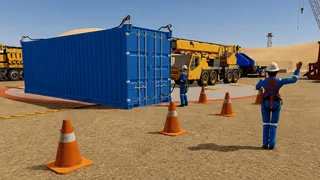
Potential applications may include responding to an alarm, completing an emergency shutdown, following lockout-tagout steps, working around mobile equipment, identifying a developing leak, or managing equipment malfunction. These situations are strong candidates for vr simulation when live practice would expose people or assets to unnecessary risk, interrupt production, require expensive setup, or be difficult to repeat consistently.
Define the desired behavior in observable terms. “Understand emergency response” is too broad to guide scenario design or assessment. “Identify the alarm, move to the designated location, communicate the condition, and select the approved shutdown action” gives instructors and developers a concrete objective. What specific behavior should the learner demonstrate, and what evidence would show that the behavior was achieved?
Match realism to the decision being practiced
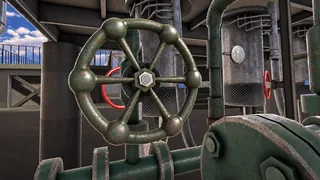
Not every learning objective requires a complete digital replica of a facility. The right level of detail depends on what the learner must notice and do. A focused environment may be enough for general hazard awareness. A task involving a particular valve, control panel, interlock, route, or machine requires those elements to be represented accurately enough to support the expected decision.
The goal is functional realism, not visual realism for its own sake. The virtual environment should present the cues, constraints, sequence, and consequences that influence performance on the job. If a learner must distinguish between equipment states, the scenario should make those states recognizable. If communication is part of the procedure, the experience should require it rather than merely describe it. Which details are essential to the decision, and which could add cost without improving practice?
TrainBeyond develops custom environments using engineering data, CAD models, facility layouts, and approved procedures. This approach can support virtual replicas of actual equipment and workspaces rather than relying only on generic industrial scenes. Teams assessing the design of immersive scenarios should ask whether a proposed experience can reflect their configuration, hazards, interlocks, decision paths, and response expectations.
This is especially relevant to teams considering oil and gas vr training. A generic platform scene can illustrate the idea of risk, but a scenario based on the organization’s own equipment and procedures may create more relevant practice for the people who must perform the work.
Design for decisions, consequences, and repetition
An effective immersive module gives learners a reason to pay attention. Present a situation, require an action, and make the result visible. The participant may need to identify a leak, select an appropriate response, communicate with a colleague, or stop a procedure when conditions change. Consequences should clarify why the correct action matters without exposing anyone to a real-world hazard.
Repetition is equally important. Learners should be able to practice a sequence, receive feedback, and try again. Repetition becomes more valuable when conditions vary: an alarm may occur from a different location, a familiar route may be obstructed, or a procedure may need to stop because a critical condition has changed. These variations encourage judgment instead of simple memorization. Can learners explain why they made a decision, or are they only repeating a memorized sequence?
Keep the experience focused and manageable. TrainBeyond’s published guidance describes central immersive sessions in the range of 30 to 40 minutes, with shorter modules and breaks used when appropriate to manage fatigue and maintain attention. A broader program can combine several modules with discussion, review, and debriefing rather than forcing every objective into one long session.
Comfort and orientation also matter. A suitable deployment plan should include an introduction to the equipment, a clear physical space, supervision, sanitation procedures, and breaks. These practical details influence whether employees can concentrate on the learning objective.
Build performance evidence into the experience
Completion alone is not evidence of competence. Before development begins, decide what the system should record. Depending on the scenario, useful measures may include procedural accuracy, response time, decision patterns, errors, retries, completion, and deviations from the approved process. What information will instructors need after the session to coach the learner effectively?
These measures can help instructors identify where an individual needs coaching. They can also reveal patterns across locations, teams, or job functions. If many participants miss the same step, the finding may point to a procedure that needs clarification, a scenario that needs revision, or an instructional introduction that is not sufficiently clear. Data should support improvement, not simply rank learners.
TrainBeyond supports SCORM-compatible learning management systems and xAPI data standards. This can allow training records to connect with existing documentation and reporting workflows. Defining the required evidence early helps ensure that measurement is part of the scenario architecture rather than an afterthought added once development is complete.
For organizations exploring osha vr training, the simulation should remain connected to the broader safety program, applicable requirements, approved procedures, and any hands-on practice required for the role. Immersive learning can strengthen preparation, but it should be evaluated as one component of formal training responsibilities.
Plan deployment, ownership, and a focused pilot
A well-designed module can still underperform if it is difficult to operate. Consider where sessions will take place, how many learners will use the experience, whether sites have reliable connectivity, who will manage the equipment, and how supervisors will schedule practice without disrupting production. Standalone headsets may support portable, multi-site deployment when teams work across facilities or when training needs to move to the workforce. Reviewing deployment best practices can help teams identify operational requirements early.
Content ownership is just as important as hardware. Procedures change, equipment is modified, and emergency expectations evolve. Establish who approves updates, how changes are documented, and how outdated scenarios are retired. TrainBeyond’s no-code authoring tools are designed to allow subject matter experts to update content without developer assistance. A sustainable model still requires version control, review responsibilities, and a defined approval process.
For an initial pilot, select one meaningful risk, one target audience, one measurable behavior, and one deployment setting. Establish a baseline where current performance information is available, then ask practical questions: Did learners recognize the hazard? Could they follow the required sequence? Did supervisors receive useful evidence? Was the equipment manageable? Could the module fit existing schedules?
A focused pilot creates evidence for the next decision. If the results support the objective, the organization can expand to another procedure, role, or location with greater confidence. If they do not, the team has a defined opportunity to refine the scenario before making a larger investment.
Questions to ask before scaling industrial VR training
What performance gap is the experience designed to address?
The answer should identify a specific operational risk and an observable behavior, not simply a general desire to use immersive technology.
Does the scenario reflect our equipment, procedures, and decision points?
Confirm that the experience includes the details learners must recognize and use in their actual roles.
How will the program show whether learners are ready?
Ask which actions, errors, decisions, and response times will be recorded and how instructors will use that evidence.
What will happen after procedures or equipment change?
Clarify who owns updates, how revisions are approved, and how outdated content will be removed from use.
Can the pilot fit our operations and workforce?
Evaluate scheduling, equipment management, physical space, connectivity, supervision, comfort, and the support required at each location.
Immersive training is most valuable when it connects a consequential operational risk with realistic practice, measurable performance, and a deployment model that can remain useful over time. To discuss a focused opportunity for your operation, contact TrainBeyond.
Train this in VR
Modules that rehearse what this article describes.