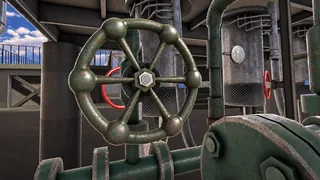
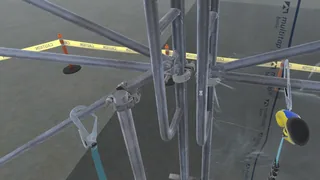
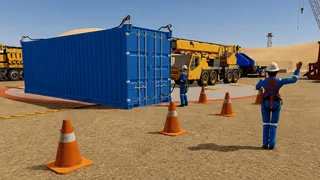
Why Confined-Space Training Matters—and How VR Helps
Working in a confined space requires more than knowing a checklist. Employees need to recognize hazards, communicate clearly, use the right equipment, and make sound decisions before and during an entry. A well-designed confined-space training program helps organizations prepare workers for these responsibilities without exposing them to unnecessary danger during practice.
Innovative virtual reality (VR) training adds an immersive, repeatable way to practice key behaviors. Instead of only discussing a procedure, learners can enter a simulated environment, identify hazards, follow controls, and respond to changing conditions. This makes VR a practical complement to instruction, supervised exercises, and site-specific procedures.
What Is Confined-Space Training For?
Confined-space training prepares employees, supervisors, attendants, and other involved personnel to understand the risks and responsibilities associated with confined-space work. The exact content should reflect the organization’s procedures, equipment, work environment, and applicable requirements.
In general, the training is useful for helping teams:
- Recognize potential atmospheric, physical, engulfment, configuration, and access hazards.
- Understand entry roles, communication expectations, and stop-work responsibilities.
- Follow pre-entry planning, isolation, ventilation, monitoring, and personal protective equipment procedures.
- Use an appropriate entry and exit process rather than improvising under pressure.
- Respond to alarms, changing conditions, or an emergency according to the site’s response plan.
- Coordinate effectively with attendants, supervisors, rescue personnel, and other workers.
Training does not replace a permit, hazard assessment, atmospheric testing, rescue planning, or competent supervision. Its purpose is to help people apply those controls consistently and recognize when work should pause.
Why Traditional Instruction May Not Be Enough
Classroom instruction and written procedures are important foundations, but they may not give every learner an opportunity to practice decisions in a realistic sequence. A worker may remember a definition yet hesitate when conditions change, communication breaks down, or a warning appears during a task.
Practice is especially valuable when a mistake in the real environment could create serious consequences. However, recreating every confined-space hazard in a live drill can require significant coordination and may expose participants to avoidable risk. VR allows organizations to rehearse selected situations in a controlled setting while keeping the learning objectives connected to real work.
Benefits of Innovative VR Training for Confined Spaces
1. Practice Without Real-World Exposure
VR can simulate a confined-space setting and introduce hazards without placing trainees inside an actual hazardous area. Learners can practice identifying risks, selecting controls, communicating concerns, and deciding when to stop. The simulation should reinforce—not replace—the organization’s real procedures and field requirements.
2. More Active and Immersive Learning
Immersive training places the learner inside a scenario instead of asking them to observe it passively. They can look around, follow a sequence, interact with relevant objects, and experience the consequences of a decision within the simulation. This active participation can make important steps easier to discuss and remember.
3. Repeatable Scenarios
With VR, the same scenario can be repeated for different employees or revisited when a learner needs more practice. Teams can focus on one behavior at a time, such as pre-entry verification, communication, hazard recognition, or emergency escalation. Repetition also gives instructors a consistent foundation for debriefing.
4. Better Decision-Making Under Pressure
Confined-space work often depends on noticing an abnormal condition and acting before it becomes an emergency. A simulation can present changing information, alarms, or competing priorities so learners practice slowing down, communicating, and following the stop-work process. The goal is not to create unnecessary stress, but to rehearse the decisions that matter when attention is limited.
5. Consistent Training Across Teams
Organizations with multiple shifts or locations can use a defined scenario to create a more consistent learning experience. Instructors can compare how teams respond to the same situation and use the results to identify topics that need clarification or additional field practice.
6. Actionable Debriefing
The most valuable part of a simulation is often the conversation that follows it. Instructors can ask what the learner noticed, why they selected a control, when they would stop the task, and how they would communicate the concern. This connects the simulated experience to site procedures and helps turn observations into improvement actions.
How to Build an Effective Confined-Space VR Program
Start with a specific operational need rather than with the technology. Identify the tasks, hazards, decisions, and communication points that workers must perform correctly. Then design a scenario around those moments and validate the content with safety professionals and people who understand the work environment.
An effective program should also:
- Define learning objectives that can be observed and discussed.
- Use site-relevant terminology, equipment, roles, and procedures where appropriate.
- Include an instructor-led briefing and a structured debrief.
- Make clear which parts of the simulation are practice and which requirements must be completed in the field.
- Offer reasonable session lengths and repeat opportunities for learners.
- Review scenario content when procedures, equipment, or hazards change.
Organizations developing immersive content can apply scenario design principles to keep the experience focused on the decisions employees must make. A broader VR safety training framework can also help connect simulations with implementation, facilitation, and evaluation.
What Results Should Organizations Look For?
Evaluation should focus on observable behaviors, not simply on whether someone completed a VR session. Useful questions include: Did the learner identify the relevant hazards? Did they follow the required sequence? Did they communicate clearly? Did they recognize when to stop? Did they understand their role in an emergency?
TrainBeyond’s owned blog reports that VR learners have mastered skills four times faster and felt 275% more confident applying them compared with traditional classroom methods. Organizations should treat such figures as a reference point rather than a guarantee for every course. Their own evaluation should consider scenario quality, learner experience, instructor support, and transfer to site procedures. Additional ideas for connecting immersive learning to outcomes appear in VR training outcomes.
Frequently Asked Questions
Who should take confined-space training?
Training should be assigned according to the person’s role and the organization’s procedures. This may include authorized entrants, attendants, entry supervisors, rescue personnel, contractors, and others who influence or support confined-space work.
Can VR replace hands-on confined-space training?
No. VR is a practice and preparation tool. It should complement classroom instruction, equipment familiarization, site-specific procedures, supervised field activities, and any other training required for the role.
What can employees practice in a VR scenario?
Depending on the design, employees can practice hazard recognition, pre-entry checks, communication, control selection, role responsibilities, alarm response, stop-work decisions, and emergency escalation. The scenario should reflect approved organizational procedures.
Is VR useful for refresher training?
Yes. A short, focused simulation can help teams revisit high-consequence decisions and discuss changes in procedures or equipment. Refresher content should be scheduled and documented according to the organization’s training program.
How should VR training be evaluated?
Evaluate observable decisions and behaviors, then reinforce them through instructor debriefing and field verification. Completion alone is not enough; the organization should determine whether learners can apply the relevant procedure in the work environment.
How can a company start a confined-space VR project?
Begin by selecting one procedure or recurring risk, defining the learning objective, and gathering accurate process information from the site. A focused pilot can reveal what needs to be simulated, what should remain hands-on, and how instructors will measure progress.
Prepare Teams Before the Moment Matters
Confined-space training helps people recognize hazards, follow controls, communicate effectively, and make safer decisions. Innovative VR can strengthen that preparation by providing immersive, repeatable practice without recreating the full risk of a live event. When it is connected to real procedures and followed by effective instruction and debriefing, it becomes a practical part of a broader safety program.
Book a VR training demo to discuss a procedure and explore how an immersive scenario could support your team.
Train this in VR
Modules that rehearse what this article describes.