Construction Safety Training: Building a Safer, More Prepared Workforce
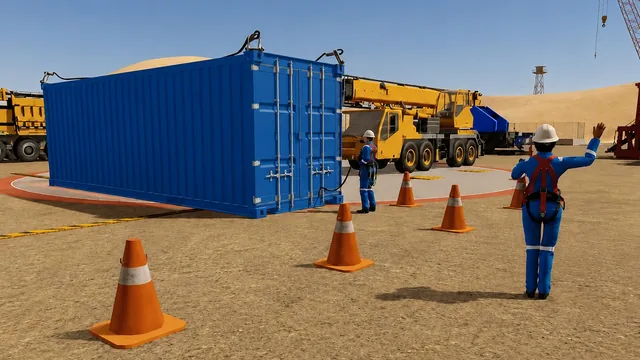
Construction sites bring together changing conditions, heavy equipment, work at height, electrical systems, vehicles, subcontractors, and teams working under time pressure. In this environment, effective safety training must do more than communicate rules. It should help workers recognize hazards, make sound decisions, and respond confidently before a situation becomes an incident.
Advanced training methods, including virtual reality (VR), can support this objective by allowing construction personnel to practice procedures and emergency responses in controlled, repeatable scenarios. When combined with site-specific instruction, qualified supervision, personal protective equipment, and established safety procedures, immersive training can strengthen preparedness and contribute to a proactive safety culture.
Why Construction Safety Training Must Be Practical
Construction work changes from one project phase to the next. A team may encounter excavation hazards one week, elevated work and lifting operations the next, and new electrical, environmental, or logistical risks as the site develops. Training should therefore connect general safety principles with the tasks, equipment, and conditions workers will actually encounter.
Practical training helps personnel:
- Identify hazards before beginning a task.
- Apply procedures consistently, even under pressure.
- Communicate risks and stop work when conditions are unsafe.
- Practice emergency responses without exposure to real danger.
- Build confidence through repetition and immediate feedback.
How Virtual Reality Can Support Construction Safety Training
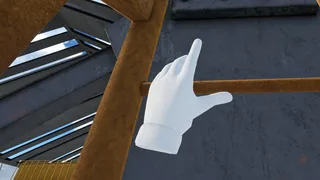
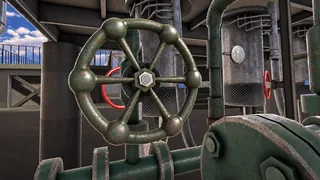
VR creates an immersive, three-dimensional learning environment in which participants can interact with simulated work areas and make decisions as conditions change. Scenarios can reproduce hazards that are difficult, costly, or unsafe to recreate during live training, while allowing the same exercise to be repeated as often as necessary.
Realistic Hazard Recognition
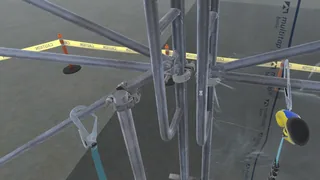
Immersive scenarios can require learners to identify unsafe conditions such as inadequate housekeeping, missing protective measures, unstable work areas, equipment hazards, or exposure risks. This practice strengthens situational awareness and encourages workers to look for hazards before starting an activity.
Emergency Response Practice
Construction teams can use simulations to rehearse responses to events such as fires, equipment incidents, falls, hazardous releases, or evacuations. Participants can practice notification, communication, evacuation routes, and decision-making in a controlled environment. Repetition helps reinforce procedures without putting workers, equipment, or the project site at risk.
Equipment and Procedure Familiarization
VR can support orientation for machinery, tools, work areas, and standard operating procedures. Personnel can learn the sequence of a task, identify critical steps, and practice responses to abnormal conditions before performing the work in the field. Training content can be adapted to reflect an organization’s equipment, terminology, and operating requirements.
Construction Topics That Benefit from Scenario-Based Training
A construction safety program should reflect the hazards and responsibilities associated with each role. Depending on the project, useful training scenarios may include:
- Personal protective equipment selection and use.
- Fall prevention and work-at-height procedures.
- Safe operation around cranes, vehicles, and heavy equipment.
- Electrical safety and energy-isolation procedures.
- Excavation, trenching, and restricted-area awareness.
- Material handling and ergonomic risk reduction.
- Fire prevention, emergency communication, and evacuation.
- Hazardous substance awareness and spill response.
- Site orientation for employees, contractors, and visitors.
The right mix depends on the project risk assessment, applicable requirements, worker roles, and the organization’s existing safety management system. Technology should reinforce those controls rather than replace them.
Benefits of Repetition, Feedback, and Measurement
Traditional instruction can explain what workers should do, but scenario-based practice gives them an opportunity to apply that knowledge. Participants can repeat a task, learn from mistakes, and receive feedback immediately. This helps turn procedures into actions that are easier to recall when conditions become complex or stressful.
Training teams can also use performance information to identify recurring gaps. For example, results may show that learners miss a hazard, select an incorrect response, or overlook a communication step. That information can guide coaching, refresher training, and updates to the broader safety program. Completion records are useful, but exercise-level performance provides a deeper view of readiness.
How to Implement Advanced Training on a Construction Project
1. Start with a Training Needs Assessment
Identify the highest-risk tasks, the roles involved, current competency gaps, and the emergency situations that personnel must be prepared to manage. Include input from workers, supervisors, safety professionals, and subject-matter experts.
2. Choose Relevant Scenarios
Prioritize scenarios that reflect actual site conditions rather than generic demonstrations. Content should use familiar equipment, procedures, terminology, and decision points whenever possible.
3. Prepare the Learning Environment
Before using VR equipment, provide clear instructions and establish a safe, obstacle-free training area. Sessions should be supervised, and participants should be allowed to take breaks if they experience discomfort, visual fatigue, or motion sickness.
4. Combine Immersive Training with Field Practice
VR is most effective as part of a broader training strategy. Pair simulations with hands-on instruction, toolbox talks, site orientations, emergency drills, equipment-specific qualification, and ongoing supervisor coaching. Workers must still follow site rules, use required protective equipment, and perform tasks under appropriate supervision.
5. Evaluate and Update the Program
Review learner performance, worker feedback, incident information, near-miss reports, and changes in project conditions. Update scenarios when equipment, procedures, hazards, or applicable requirements change. Continuous evaluation keeps the training relevant and supports continual improvement.
Building a Proactive Safety Culture
Technology alone does not create a strong safety culture. Leadership must set clear expectations, workers must be encouraged to report hazards, and everyone should understand their responsibility to protect themselves and others. When training is engaging, relevant, and connected to daily work, personnel are more likely to participate actively and apply what they learn.
For construction organizations, the goal is not simply to complete a course. It is to develop a workforce that can recognize changing risks, communicate effectively, make safe decisions, and respond to emergencies with greater confidence.
Frequently Asked Questions
What should construction safety training include?
Training should reflect the project’s risk assessment and each worker’s role. Common topics include hazard recognition, personal protective equipment, fall prevention, equipment operation, electrical safety, excavation, material handling, fire response, evacuation, and site orientation.
Can VR replace hands-on construction safety training?
No. VR can complement classroom instruction, field demonstrations, drills, equipment qualification, and supervisor coaching. It provides controlled practice, but workers must still demonstrate the required practical skills and follow applicable site procedures.
Is VR appropriate for new construction workers?
It can help introduce new workers to site hazards, procedures, equipment, and emergency decisions before they enter the field. It should be combined with site-specific orientation, competent supervision, and any required practical training.
What construction emergencies can be simulated?
Depending on the program, simulations may address fires, falls, equipment incidents, hazardous releases, evacuations, communication failures, and other project-specific situations. Scenarios should be selected according to the organization’s risk assessment.
How can training managers measure readiness?
In addition to completion records, managers can review hazard-identification accuracy, decisions made during scenarios, communication steps, response times, assessment results, worker feedback, near-miss information, and recurring performance gaps.
What should workers do if they feel discomfort while using VR?
Participants should stop or pause the session and notify the instructor if they experience discomfort, visual fatigue, dizziness, or motion sickness. Training areas should be clear of obstacles, sessions should be supervised, and breaks should be provided as needed.
Conclusion
Construction safety training is most valuable when it prepares people for the decisions they will make in the field. Scenario-based learning and VR can provide a controlled way to practice hazard recognition, emergency response, equipment procedures, and teamwork. With customized content, immediate feedback, and continuous evaluation, these methods can complement established safety practices and strengthen workforce readiness.
TrainBeyond develops immersive and customizable training experiences designed around organizational objectives. To discuss how advanced safety training could support your construction workforce, contact TrainBeyond.
Train this in VR
Modules that rehearse what this article describes.