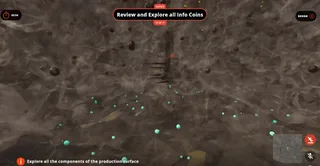
Virtual Reality Training: Confined Space Safety
This interactive virtual reality training simulates real-world Confined Space scenarios.
Description
Atmospheric hazards, toxic gases, and engulfment risks are among the most dangerous and costly incidents in industrial manufacturing and maintenance operations. Our immersive Confined Space training equips your workforce with essential skills to prevent and respond to these events effectively, minimizing risks to personnel, assets, and the environment.
This interactive virtual reality training simulates real-world Confined Space scenarios, providing a safe and controlled environment for workers to practice crucial decision-making and emergency operating procedures.
The training aligns with industry regulations and best practices, ensuring your team is prepared to handle hazardous entry protocols and atmospheric monitoring while complying with standards with total safety and confidence.
With our Confined Space training, your workers will learn to proactively manage these incidents, reducing the likelihood of catastrophic events and equipping them with the skills needed to react quickly and effectively under real operating conditions.
Our Confined Space training course covers key safety and emergency response protocols, including:
- Pre-entry atmospheric testing and continuous multi-gas monitor verification.
- Confined space entry permit protocols, lockout/tagout (LOTO), and ventilation.
- Proper fit and use of safety harnesses, retrieval lifelines, and tripod systems.
- Emergency standby attendant communication and non-entry rescue procedures.
Questions
01How can I train in Confined Space in virtual reality?
You train within immersive simulations that replicate real situations, from atmospheric pre-testing to non-entry emergency rescue. The platform allows you to interact with equipment, operate necessary controls, and rehearse the response sequence in a risk-free virtual environment, with real-time performance tracking so supervisors can see how each decision was made and how quickly the crew reacted.
02Who is the Confined Space training designed for?
This program is aimed at authorized entrants, standby attendants, entry supervisors, and safety managers, as well as new hires. It is also extremely valuable for supervisors and area coordinators looking to reinforce knowledge, evaluate competencies, and ensure their teams master critical protocols before facing daily work risks inside tanks, vessels, and silos.
03How does Confined Space training compare to traditional methods?
Unlike theoretical presentations or printed manuals, our methodology offers experiential learning based on repetition and muscle memory. Traditional methods lack the simulated stress that virtual reality provides, which ensures greater knowledge retention, accelerates the learning curve, and allows tactical responses to be rehearsed without real-world consequences or equipment damage.
04Can I customize the Confined Space training for my company's specific needs?
Yes, our base modules can be adapted or expanded to faithfully reflect your organization's specific procedures. This may include integrating your own safety regulations, the exact layout of your facilities, or the particular type of machinery you use, ensuring the training is completely relevant to your team.
05What specific types of scenarios does the Confined Space course cover?
The course covers everything from daily operating routines to severe emergencies like sudden oxygen deficiency or toxic gas buildup inside a vessel. Users will face complex variables such as hazardous atmospheric shifts, restricted egress points, and the requirement to apply mechanical ventilation and safe non-entry retrieval. Each simulation is designed to test worker judgment and ensure flawless execution of the correct steps under high pressure.