

 Return to Work at Height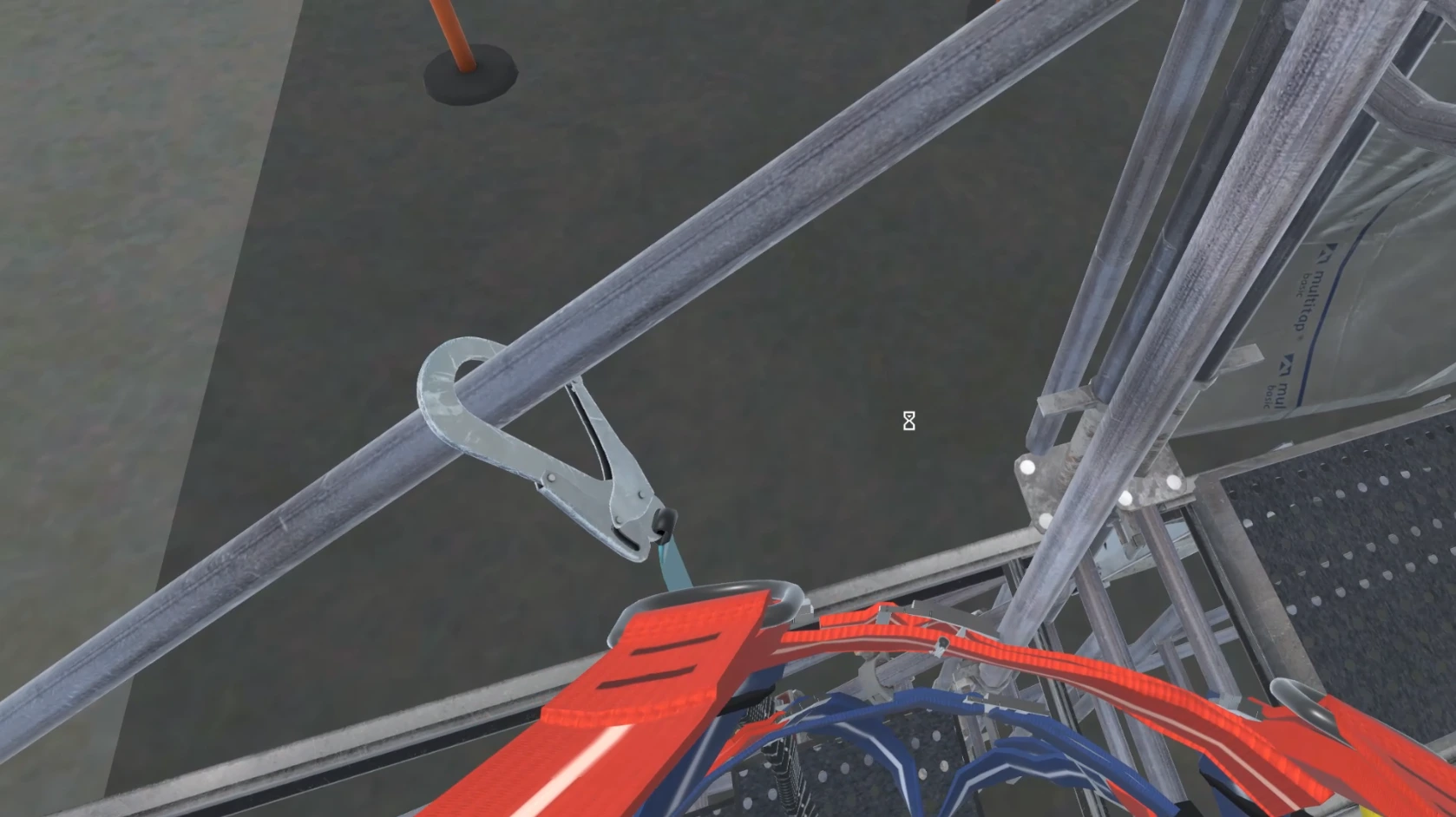
Personal Fall Protection Systems VR Training
One missed step in donning a harness or misjudging fall clearance can turn a routine task at height into a fatality. This immersive VR training exercise puts workers through the full sequence—fitting, inspecting, and anchoring a personal fall arrest system—before they ever climb.
20 minutes
Scaffold Structure
Description
Falls from height remain one of the most common causes of serious injury and death on industrial sites, and the difference between a controlled fall and a fatal one often comes down to a single detail: a harness that isn’t fitted correctly, a D-ring rated for less force than the job requires, or a lifeline anchored without enough clearance below it. These aren’t abstract risks — they’re the specific, checkable details that a personal fall protection system depends on to work.
This VR exercise walks workers and supervisors through that entire chain of decisions. Participants practice putting on a full-body harness correctly — starting from the dorsal D-ring, through the leg and shoulder straps, to the chest strap — and learn to recognize what “snug but not tight” actually feels like. They also work through the clearance calculation that determines whether a fall arrest system will stop a fall before the worker hits a lower surface, combining lanyard length, deceleration distance, D-ring height, and safety margin. HSE managers and site managers train alongside crew members, reinforcing the oversight role they play in verifying equipment and approving anchor points before work begins.
The exercise is built around the load ratings and design requirements that govern real fall protection equipment — full-body harnesses rated to arrest forces up to 5,000 lb, D-rings rated to a minimum of 3,597 lb, and self-retracting lifelines rated to either 3,000 lb or 5,000 lb of static load depending on how much free fall they allow. Framing the training around these numbers, rather than generic safety talking points, means workers leave understanding why a piece of equipment is rated the way it is, not just that they’re supposed to wear it.
For workers, that translates into confidence that holds up under pressure: recognizing a damaged D-ring or a shock absorber that’s already deployed, knowing when a harness is adjusted correctly without needing a supervisor to double-check every strap, and understanding what to do — and who to report to — the moment something looks wrong. For HSE and site managers, it means fewer equipment-related incidents traced back to inspection gaps that should have been caught on the ground.
This exercise covers the practical skills and knowledge needed to work safely with personal fall protection systems, including:
- The roles of the HSE manager and site manager in approving and overseeing PFPS use.
- Correctly donning a full-body harness, from the dorsal D-ring to the chest strap.
- The function and rated capacity of dorsal, sternal, and hip D-rings.
- Calculating required fall clearance using lanyard length, deceleration distance, D-ring height, and safety distance.
- How self-retracting lifelines and lanyards limit free fall and the load ratings tied to that limit.
- Pre-use inspection for worn connections, cracks, and other defects.
- Reporting damaged or non-compliant equipment to a supervisor or the HSE department.
Personal Fall Protection Systems VR Training Questions

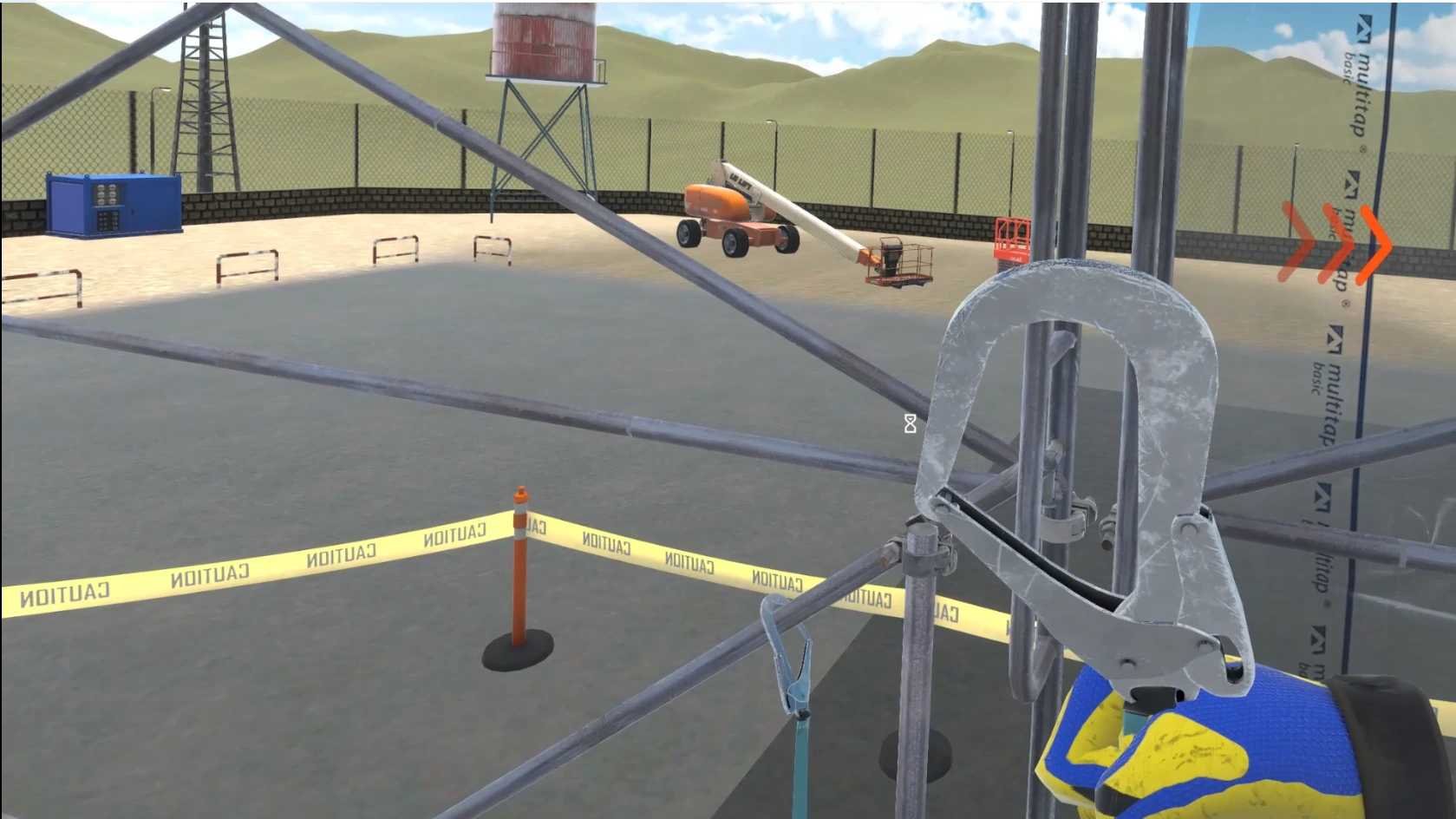
TrainBeyond builds this exercise around your team’s actual harnesses, D-rings, and anchor points. Workers practice fitting a full-body harness, inspecting equipment for damage, calculating fall clearance, and anchoring correctly on a virtual scaffold structure that mirrors your site.
Trainees put on a VR headset and are placed on a scaffold structure, where they practice donning a harness, checking connection points, and setting up a compliant fall arrest system. TrainBeyond tracks each action in the simulation so instructors can pinpoint exactly where a worker hesitates or makes a mistake, something a classroom demo simply can’t show.
Yes. TrainBeyond doesn’t sell a generic module; every exercise is modeled on your company’s harness types, anchor points, and scaffold layouts, so what workers practice in VR matches exactly what they’ll use on your site.
Classroom training on fall protection is largely passive. A VR exercise instead has workers physically fit a harness, calculate clearance, and inspect equipment themselves, repeating it as many times as needed until it becomes second nature, with no real fall risk during practice.
It’s built for anyone who works at height and relies on a personal fall arrest system: riggers, scaffolders, and maintenance crews, as well as HSE managers and site managers responsible for approving equipment and anchor points before work begins.
