

 Return to Mechanical Lifting Module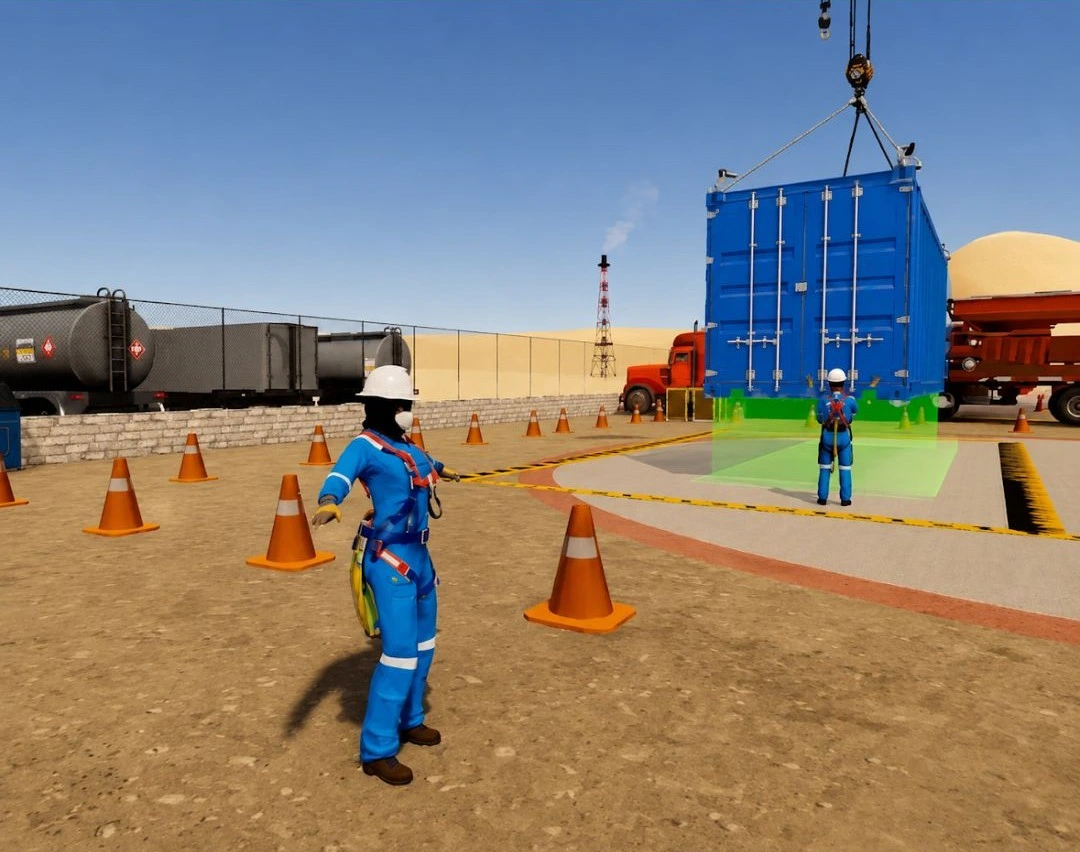
Banksman
VR Training
Immersive training on essential banksman signaling and safety skills to protect your workers.
30 minutes
Drilling Rig Site
Description
Lifting and crane operations pose immediate and severe risks in industrial and construction settings, where blind spots, miscommunication, and heavy loads require rapid response and flawless execution.
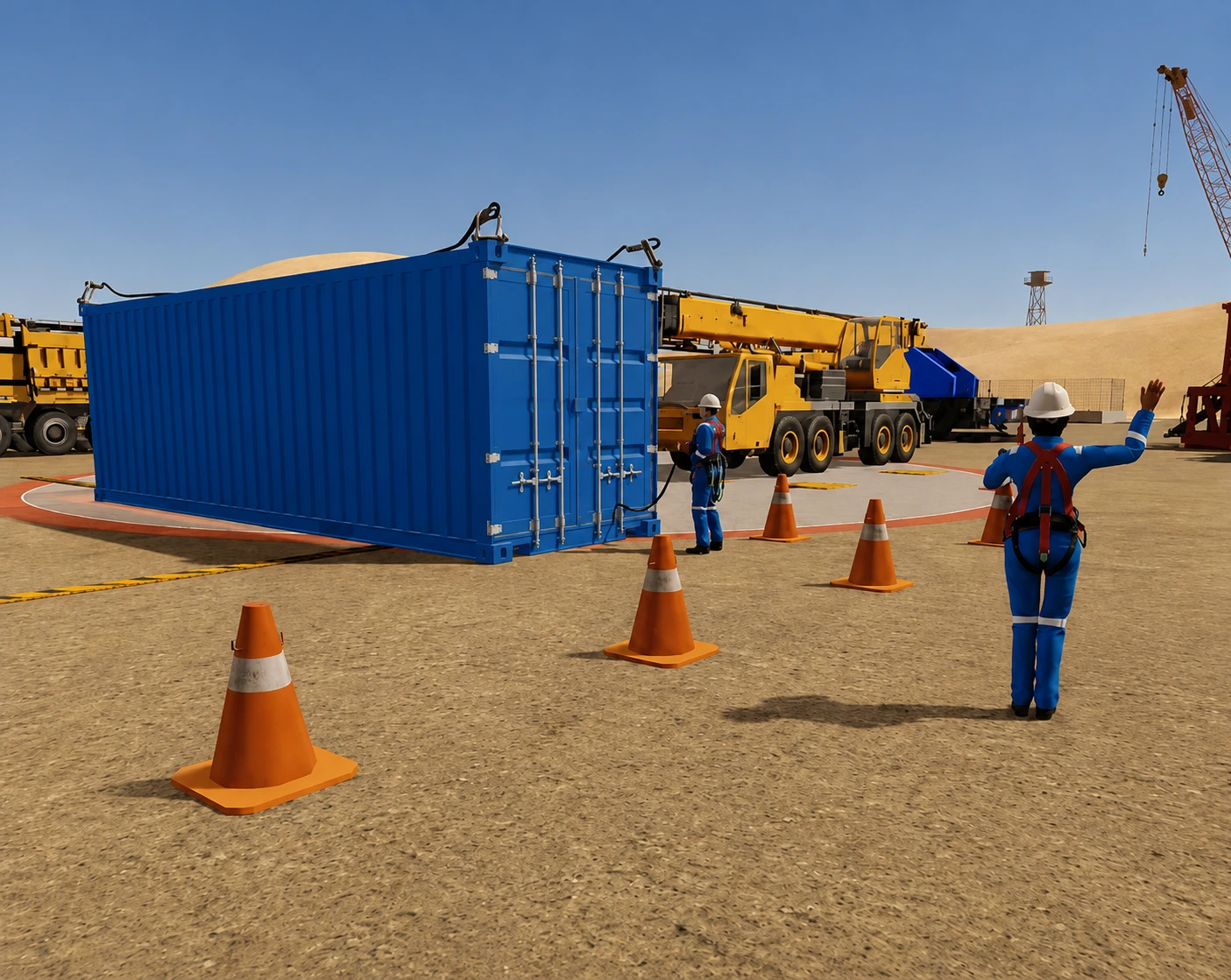
Our immersive VR Banksman Training prepares your workforce to handle communication hazards and operational protocols in high-risk environments, ensuring they are ready to react swiftly and effectively in the face of danger. Designed to mirror real-life site operations, this interactive experience allows workers to practice vital hand signaling, site visibility management, and emergency safety protocols in a controlled, risk-free setting.
The training aligns with international lifting standards and best practices, equipping your team with the skills needed to prevent, control, and respond to lifting incidents with confidence and precision.
By engaging in this virtual reality training, your workers will gain practical experience in managing crane movements and ground communication, improving their preparedness and boosting overall workplace safety.
Our Banksman VR Training course covers critical operational safety and response protocols, including:
- Identifying potential spatial hazards and recognizing early warning signs of lifting failure.
- Initiating emergency stop signals and coordinating with crane operators and ground teams.
- Operating standardized hand signals, radio communication systems, and blind-spot monitoring safely.
- Executing emergency mitigation steps while minimizing risk to personnel and assets.
Oil and Gas VR Training Questions

You can train for banksman operations in VR by using our immersive platform that simulates real-world scenarios like blind lifting, sudden weather shifts, communication drops, and emergency stops. This virtual reality training allows workers to practice critical operational signaling and emergency response techniques in a risk-free environment, ensuring they are fully prepared before encountering these heavy-lifting situations on-site. With hands-on exercises and real-time performance tracking, immersive vr training not only improves retention of technical protocols but also helps organizations enhance overall safety and compliance in lifting services.
This training is insensitive to industry but designed for banksmen, signal persons, crane operators, rig floor personnel, and safety officers who operate in high-risk lifting environments. It is ideal for anyone who needs to master load direction, site positioning, and situational awareness without being exposed to falling load hazards or actual physical risks during heavy equipment operations.
Traditional methods often rely on passive manual reading, classroom presentations, or expensive, high-risk live training near active cranes. In contrast, immersive vr training offers a repeatable, engaging, and comprehensive experience. It allows trainees to feel the pressure of operational failures and practice critical decision-making in real-time, which significantly increases muscle memory and precise procedure retention.
Yes, the platform allows for customized configurations to match your specific fleet’s crane models, site configurations, and internal safety protocols. You can personalize the virtual environment to reflect your company’s unique hand signal standards, lifting checklists, and internal safety branding.
The course covers a wide range of critical situations, including pre-operational site inspections, proper handling of complex loads in blind spots, emergency communication isolation, and response to unexpected mechanical failures. All scenarios are developed following international industry standards like OSHA, ASME, and ISO to ensure global safety and operational compliance.
