

 Return to Work at Height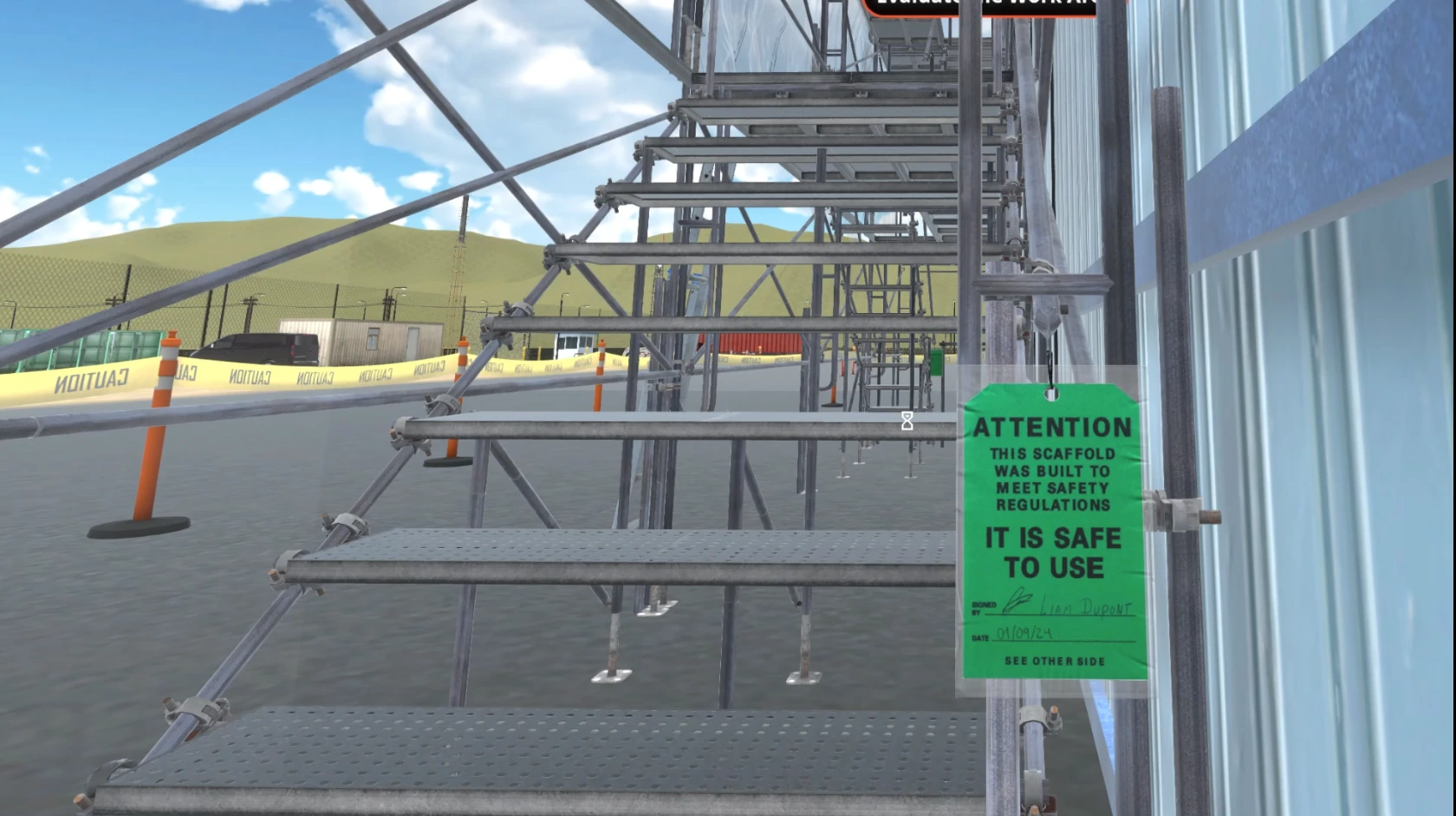
Collective Fall Protection System VR Training
A harness only protects the person wearing it. This immersive VR training exercise trains crews to install, inspect, and sign off on guardrails and safety nets, the systems that protect everyone working on a scaffold at once, before a single worker steps onto it.
25 minutes
Scaffold Structure
Description
Personal fall arrest equipment only protects the individual wearing it, and it depends on that individual using it correctly every time. Collective fall protection systems work differently: guardrails, safety nets, and edge protection are installed once and protect every worker who enters that space, regardless of whether they’re clipped in. When these systems are missing, installed incorrectly, or removed temporarily during a task and never reinstalled, the result is an unprotected edge that every worker on the scaffold is exposed to, not just one.
This VR exercise trains workers, foremen, and supervisors to recognize when collective protection is required and how to verify it’s installed to standard. Participants practice assembling a guardrail system, checking that the structure follows the required task risk assessment (TR), and confirming that work within or above 2 m (6.5 ft) of an unprotected edge has an approved permit to work (PTW) before anyone proceeds. They also learn to distinguish between a hot work permit, needed for welding, cutting, or grinding, and a cold work permit, used for mechanical or inspection work that doesn’t generate heat or sparks, since the type of permit changes which precautions apply.
The exercise follows the load and spacing requirements that make collective protection systems effective rather than symbolic: guardrails built with a top rail at approximately 1.07 m (42 in), capable of withstanding at least 890 N (200 lb) of outward or downward force, and a mid-rail and toe board to close off lower gaps. Safety nets are positioned so they extend far enough beyond the working edge to catch a fall at the required distance below, with mesh openings small enough to prevent a worker from passing through. Framing the training around these specifications means a guardrail that looks installed but isn’t properly anchored gets caught in VR, not on site.
For workers, that means recognizing a scaffold edge that isn’t adequately protected before stepping near it, rather than assuming someone else already checked. For foremen and HSE supervisors, it means the daily task risk assessment and periodic inspections actually catch gaps in collective protection instead of just confirming personal PPE is being worn. For site and construction supervisors, it reinforces the responsibility to keep resources and control measures in place continuously, not just at the start of a shift.
This exercise covers the practical skills and knowledge needed to work safely around collective fall protection systems, including:
- The difference between personal and collective fall protection and when each applies.
- Installing and inspecting guardrail systems, including top rail, mid-rail, and toe board requirements.
- Positioning and verifying safety nets for adequate drop clearance and mesh size.
- Completing and reviewing a daily task risk assessment (TR) before work begins.
- Recognizing when a permit to work (PTW) is required and the difference between hot work and cold work permits.
- The roles of the foreman, HSE supervisor, site manager, and construction supervisor in verifying and maintaining collective protection.
- Stopping work immediately when a safety control is missing, damaged, or has been temporarily removed.
Collective Fall Protection System VR Training Questions

TrainBeyond builds this exercise around your site’s actual guardrail systems, safety nets, and scaffold layouts. Workers and supervisors practice installing and inspecting collective protection, completing a task risk assessment, and confirming permit-to-work requirements are met before any work begins near an unprotected edge.
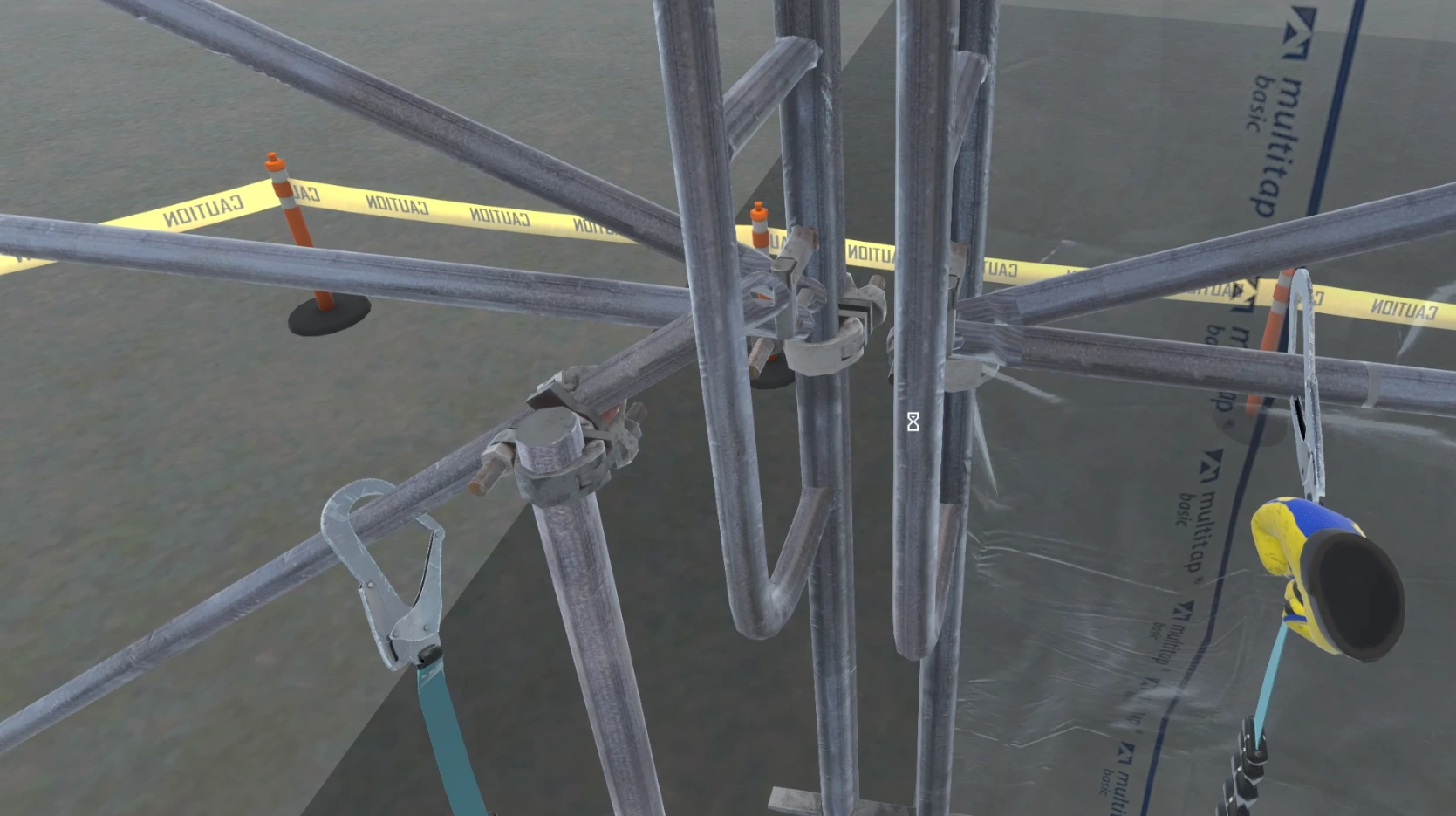
Trainees put on a VR headset and are placed on a scaffold structure where a guardrail or safety net system needs to be assembled, inspected, or verified. TrainBeyond tracks each decision in the simulation, including missed inspection steps or incorrect installations, so instructors can see exactly where a worker’s judgment needs correction before it matters on a real site.
Personal fall protection, like a harness and lanyard, protects only the individual wearing it and depends on correct use every time. Collective fall protection, like guardrails and safety nets, is installed once and protects everyone in that area regardless of whether they’re wearing personal equipment, which is why verifying it’s installed correctly matters for the whole crew, not just one worker.
Yes. TrainBeyond doesn’t offer a generic collective fall protection module; each exercise is modeled on your company’s actual guardrail specifications, safety net setups, and scaffold configurations, so what supervisors and workers verify in VR matches what they’ll inspect on site.
This exercise is designed for foremen, HSE supervisors, site managers, and construction supervisors responsible for installing, inspecting, or approving guardrails and safety nets, as well as any worker who needs to recognize when a scaffold edge isn’t adequately protected.
